Mark's Ham Shack
Mark's Ham Shack
One reason I started fiddling with radios nearly two years ago was simple: I wanted an easy way to talk to my wife while we were both outside doing chores. I jokingly think of my approach to the hobby as finding “complicated ways to talk to my wife.” I was carrying an expensive cell phone around the farm and realized a pair of radios might make more sense. So I bought a GMRS license and a pair of UV-9RM handhelds. They are still some of my favorite radios because they are inexpensive, straightforward, and useful around the farm. Whether I am walking the dogs in the evening or working out on the tractor, they usually give me about a mile of range—enough to stay in touch with the house, especially if I shut the tractor down. If I ever find one at the right price, I may add a GMRS repeater to the growing pile of radios.

About a month ago I saw a listing on Facebook Marketplace for a Bridgecom Skybridge. I have/had a Xiegu g-106 that I've not been using very much since I got my x6100. I sent them a message and said I'd trade. He said, "maybe". A month goes by and he messages me back, "If you want it, lets trade." He then sends me his location. I didn't really pay any attention to the location anymore than it was down there south of me, on the south east side of Grand Lake. He had also said something like, "if you can get down here." But I didn't really think about it.
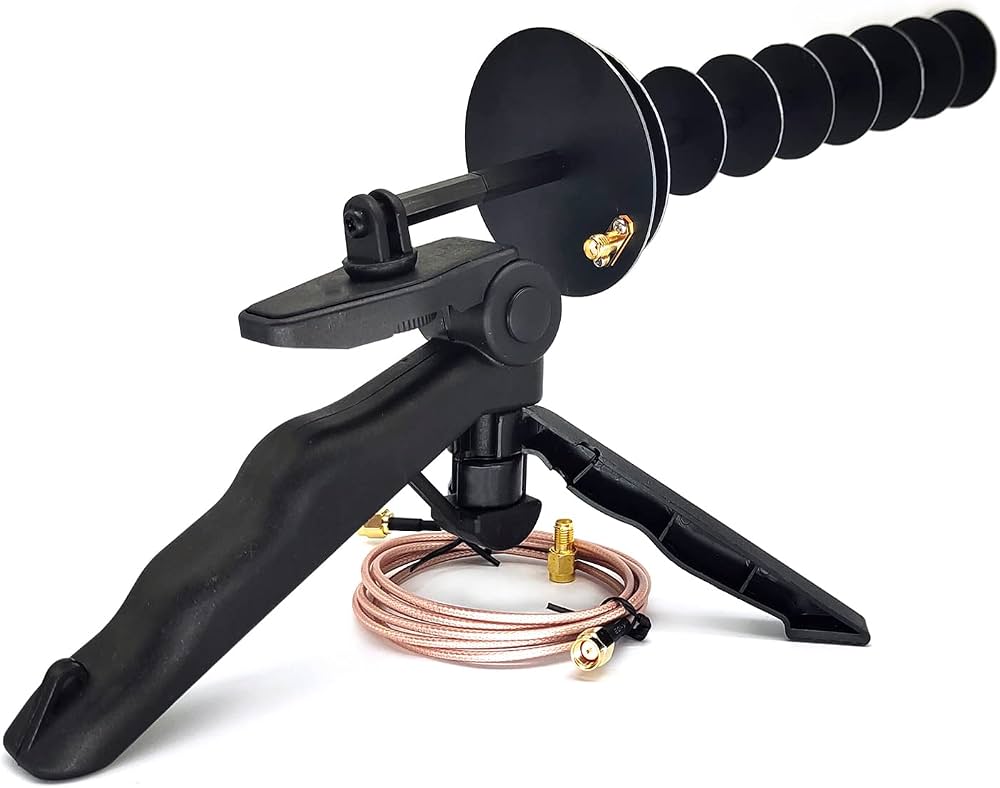
I’m still so new to satellites that I don’t know what I don’t know yet. A couple of weeks ago, while I was at the ARRL Teachers Institute, we learned the basics of making satellite contacts. I left the Institute with a Quansheng radio and a small UHF/VHF Yagi antenna. I listened to a few satellites while I was there, and I’ve tried to recreate that experience with the same gear at home. I haven’t had much luck yet, but then again, it took me a long time to talk to anyone on my first CB. Right now, I’m using the K6 radio to try to hear the ISS. I haven’t managed it yet, but it’s fun to keep trying. .
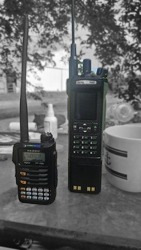
When I first got into radio, I didn’t really see myself getting interested in digital modes. I agreed with a lot of older hams who felt that digital modes seemed better suited to the internet than to amateur radio. Then, while I was at the ARRL Teachers Institute, I received a ZUM spot hotspot and a Yaesu FT-70D. I spent an afternoon setting up the hotspot and learning how to use it. Later, at the Claremore Ham fest, I attended a presentation on the KC-Wide network and learned that it is a YSF reflector and one of the busiest in the world. I pointed my ZUM spot in that direction and listened all day. Before long, I was checking into a few nets and making a couple of DX contacts, including Japan and South Africa. I must admit, it certainly felt like ham radio. That got me thinking about how digital modes could be a great way to get Technicians on the air. Eventually I thought, “Maybe I should set up a reflector myself.” Research that took a couple of days and getting it running led me down roads I hadn’t traveled in a long time, including building this website. In the end, I changed my mind. Digital modes are definitely ham radio.
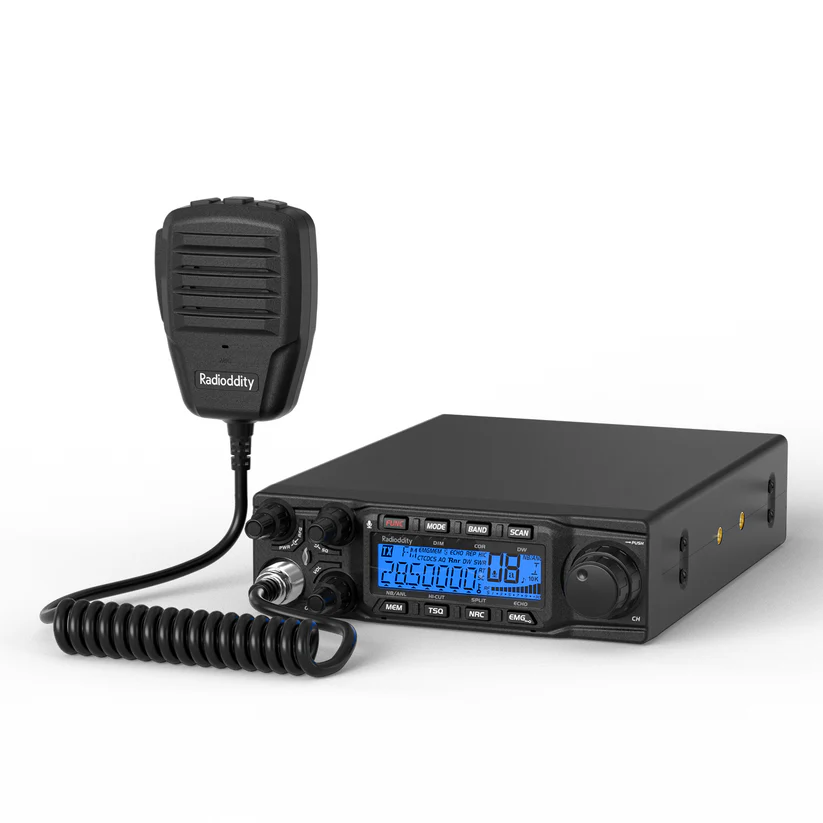
My first on-air experiences were with a Cobra Mini 19 CB, one of the models that supports both AM and FM. Since my scanner was an FM scanner, I just left the CB on the FM band. At first, I thought it might be broken. I had picked it up for next to nothing, but I wasn’t hearing anything on it, and no one responded when I transmitted. Meanwhile, my scanner was picking up signals that I couldn’t seem to hear on the CB. I still don’t know why my FM scanner was picking up AM signals—really strong AM signals—but eventually I realized the CB was on the wrong band. I also figured out that I probably didn’t have a very good antenna. Later, I found a handheld CB on Marketplace and confirmed that the Cobra did work. I also discovered that handheld CBs are a lot of fun to use around the house. I still have the Cobra, but I’ve since added three handheld CBs and a TYT-TH9800. I also dramatically improved my antenna with an A99 with a ground plan kit. I still don’t talk to many people on CB, but once in a while someone answers my call, and they are really interesting to listen to.
I got my General license in January. Around that time, I found a Xiegu G106 on Marketplace that the seller was ready to let go for $150. Shortly after that, I built my first dipole antenna for 20 meters. I bought a 1:1 balun from Amazon, mounted it at the top of a pole about twenty feet up, and started making contacts. I really enjoyed talking to people locally on CB, and the 20-meter band opened that up to conversations with people around the world. In February or March, I bought my first vertical antenna, a “Red Slug” from Amazon. I had seen Salty Walt using one on YouTube, and it worked just as well for me as it did for him, even though I’m not on the beach. The vertical antenna let me take the G106 portable, so I started making the rounds of local lakes and parks. Since then, I’ve built a 40-meter dipole and added a top hat and coil to my 20-meter whip to expand the bands I can work. I enjoy making contacts, and I’m getting close to my first 100 (96). So far, I’ve contacted 26 countries. I’m also starting to find a network of people to rag chew with on warm summer evenings. Now I’m thinking about how to bring my new rig, an X6100, inside and connect it to a more permanent antenna so I can keep talking when the weather turns cold
A bit of an Update: I purchased a Xiegu X-6100 in May and I've started using it in place of my g106. It is great to have a radio with a built in tuner and that doesn't require that I lug a battery around. I'm still using the red slub when I want to go portable but I've started working on a fan dipole. I've got 40 and 20 meters working up about 30 feet. I am thinking I will add another wire to it for 17 meters, though my tuner will tune 17. I'm past 100 contacts now working on my 30th country. It has just been sooooo hot here lately that I can't really stand to get on the air even after the sun goes down.
If you know an If you know someone who enjoys both radio and teaching, encourage them to look into the ARRL Institute for Teachers. It is completely funded by ARRL donors, and the experience is excellent from start to finish. The instructors are knowledgeable and generous with their time, but just as valuable is the chance to meet other educators who use STEM in all kinds of settings. In my group of twelve, we had everyone from longtime vocational education teachers to middle school special education teachers. It was fascinating to see how such an eclectic group approached amateur radio and how they planned to use it as a way to teach a wide range of topics. I am adding a few pictures here from the four days I spent at ARRL headquarters, and I will include a link to the Institute page at the end. The whole experience was a lot of fun, and it came at no cost to me. Over the course of four days, we built several antennas, assembled a Raspberry Pi 5 computer, created a Pi-Star hotspot, built the equipment needed for a fox hunt, and even made a satellite contact using an antenna we had built ourselves. For anyone who likes radio, teaching, or hands-on STEM learning, it is absolutely worth considering.
Sample text. Click to select the Text Element.